
Paris, Texas (1984)
German film director Wim Wenders created Paris, Texas (1984) as what can be regarded as a love letter to the American dream. Looking in from the outside, Wenders visually encapsulates this facade successfully through the dreamy haze of the sun-scorched San Fernando Valley, fluorescent neon lights from motels and gas stations, and long stretches of highway. The main protagonist, Travis played with full conviction by Harry Dean Stanton is found wandering aimlessly adrift in the desert. Eventually, he is picked up by car by his brother, Walt (Dean Stockwell), after not hearing from him in 4 years. Walt explains to a bewildered Travis that he and his wife Anne (Aurore Clément) have taken in Travis’s son, Hunter (Hunter Carson), when he was left on their doorstep after what is alluded to be a dramatic and tantalising falling out between Travis and Hunter’s mother, Jane – played by the alluring Nastassja Kinski.
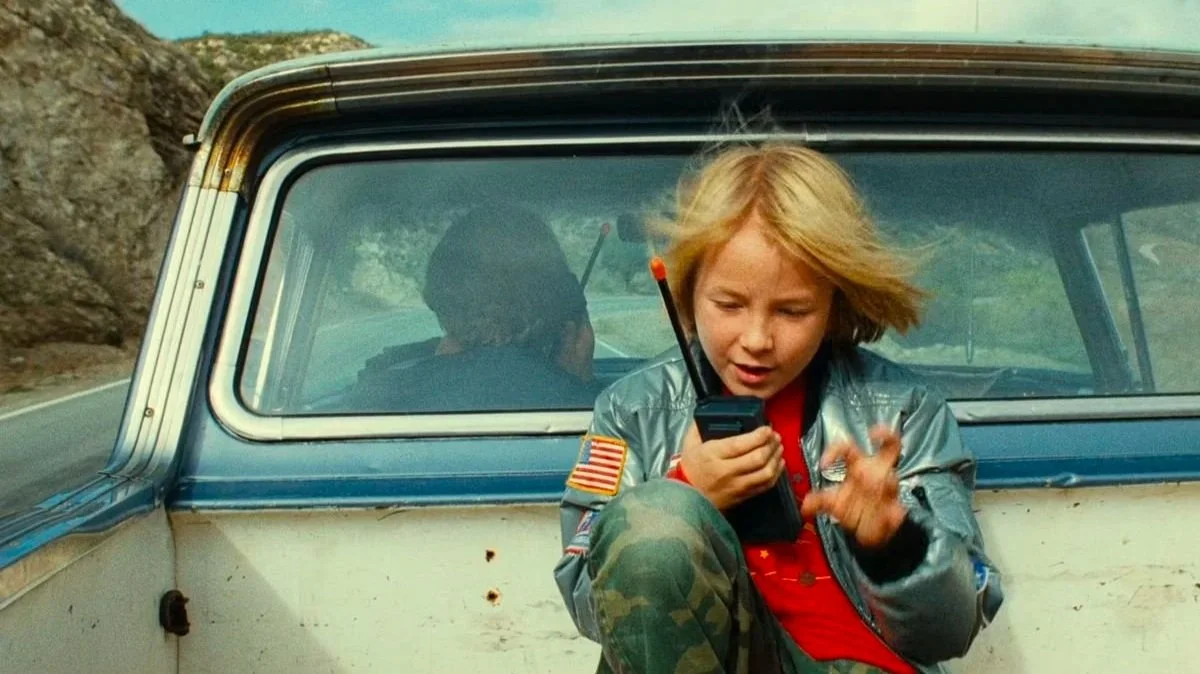
The film relies on distanced communication that’s mediated by a one-way peep-show mirror, phone booths, Super 8 film, and walkie-talkies, all signifying truths too difficult to utter plainly. Communication in Paris, Texas is rarely direct. Instead, Wenders places physical barriers between his characters. Allowing intimacy and tension to exist through home movies, a telephone line, or a mirror. These barriers become a visual representation of the emotional distance between them, as characters may be able to hear or see one another, yet unable to truly reach them.
Travis and Walt’s car ride is filled with confusion and missing pieces. Walt's attempts to understand where Travis has been for the last four years are brought back to the plain explanation by Travis that he wanted to go to Paris, Texas, because he believes that was where he was conceived. Perhaps in an effort to move closer to himself and his roots. Walt warily tells Travis that his son is now eight, and that he has been gone for half the boy's life.
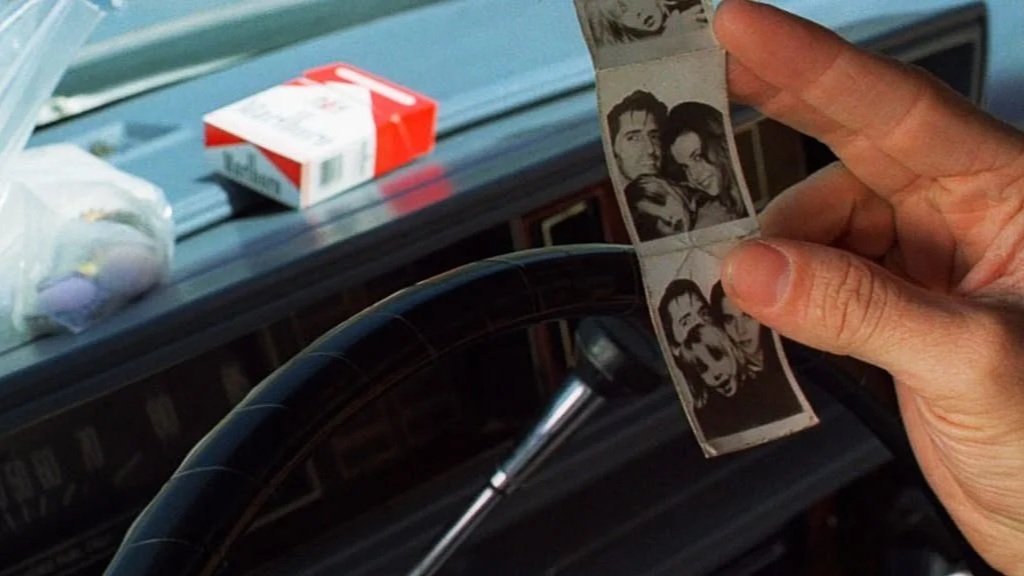
Upon his father's return, Hunter regards him as a distant relative, unable to place exact significance on the weight of his parental role. It’s not until Walt suggests they play a video of the last time the family was all together again, shown on nostalgic Super 8 film footage. The footage illustrates the warmth of the characters' dynamics, evidently close-knit and happy. This is also the first time we see Jane and the way she and Travis were together. The viewing of the footage not only brings clarity to Travis and Hunter, but to the audience as well, demonstrating visually what could not be said in words.
Paris, Texas (1984)
Regaining memory and autonomy of his life, Travis makes the decision to look for Jane in an effort to bring his family back together. After Anne discloses the bank that Jane has been depositing money in for Hunter, Travis decides to find her. When Hunter discovers his father's plan, he urges to let him come along. This places another layer of strain on the relationship of Walt and Anne, who came to treat Hunter as their own, emphasising his role in keeping the two together as Anne says, “I’m afraid of what will happen to us if we lose Hunter.” Later, a delicate Anne breaks down in the kitchen as Hunter calls from a phone booth to tell her, with childlike simplicity, that he has already left with Travis; their voices connected by the telephone yet physically separated, the reality of the distance between them becomes painfully apparent.
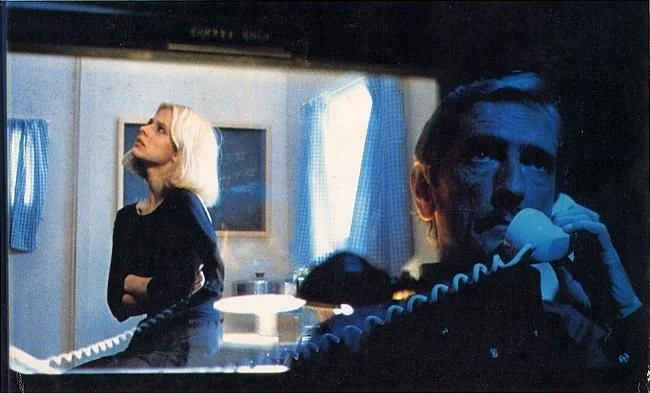
Travis tracks down Jane at her place of work – an adult peep-show that uses a telephone to communicate, and Travis disguises himself as a client. Through a one-way mirror, Travis is able to see Jane, but she is only able to see herself. Unquestionably the strongest scene in the film, the audience finally understands what went wrong with Jane and Travis. Travis begins by asking if he could tell Jane a story. Still unaware of the identity behind the voice, Jane says she doesn’t mind listening, as she does it all the time. A heartbreaking vignette of jealousy, alcoholism, and self-destruction is revealed by Travis as he tells their story in the third-person narrative.
Even in the final resolution and confession from Travis, Jane is left to face the reflection of herself in the mirror – while Travis is still able to see her, he chooses to recount their story with his back facing her, unable to bear the weight of seeing her pained facial expressions. Kinski gives a raw and visceral performance in the final telephone scene that contrasts with her enigmatic demeanor, which we see brief glimpses of throughout the film. In one of the most powerful speeches, after Jane realises who she’s speaking with, she holds the phone to her ear to tell Travis: “I hear your voice all the time, every man has your voice.”
Travis leaves Jane by telling her Hunter is waiting in a hotel room for her. In that same hotel room, Hunter listens to a voice recording left by Travis, telling him he must go away. Later, from the parking lot below, Travis witnesses a silent reunion between Jane and her son as he drives away yet again.
Paris, Texas (1984)
